

How do you solve a problem you don’t fully understand?
It’s a question Urban Alliance asks constantly. Across Greater Hartford, families face overlapping challenges—food insecurity, unstable housing, and limited access to education and health care. Churches, nonprofits, and community organizations respond with compassion and urgency. But without a clear picture of what’s actually happening in the community, it becomes difficult to know which efforts are making a difference and which needs are most pressing.
This is why Urban Alliance invests in community research. It means developing a deep understanding of the community—not guessing at what matters, but truly knowing it. Research is how we get there.
Research Isn’t Just Academic—It’s Practical
Over the years, Urban Alliance has compiled research that goes beyond statistics. We’ve studied the intersection of faith and recovery. We’ve examined how food pantries can become centers of dignity and connection, not just places of emergency relief. We’ve analyzed who is struggling in our region and why. Each study answers the same underlying question: What do our partners need to know to serve more effectively?
This week, we’re sharing one of those studies with you: the ALICE Families Report. ALICE stands for Asset Limited, Income Constrained, Employed—and it describes the reality of thousands of households in Greater Hartford. These are individuals and families working full-time jobs who still live paycheck to paycheck, often struggling to afford housing, food, child care, and medical care at the same time.
The report quantifies that struggle. More importantly, it helps explain why families are forced to make difficult choices—and why coordinated community support is essential.
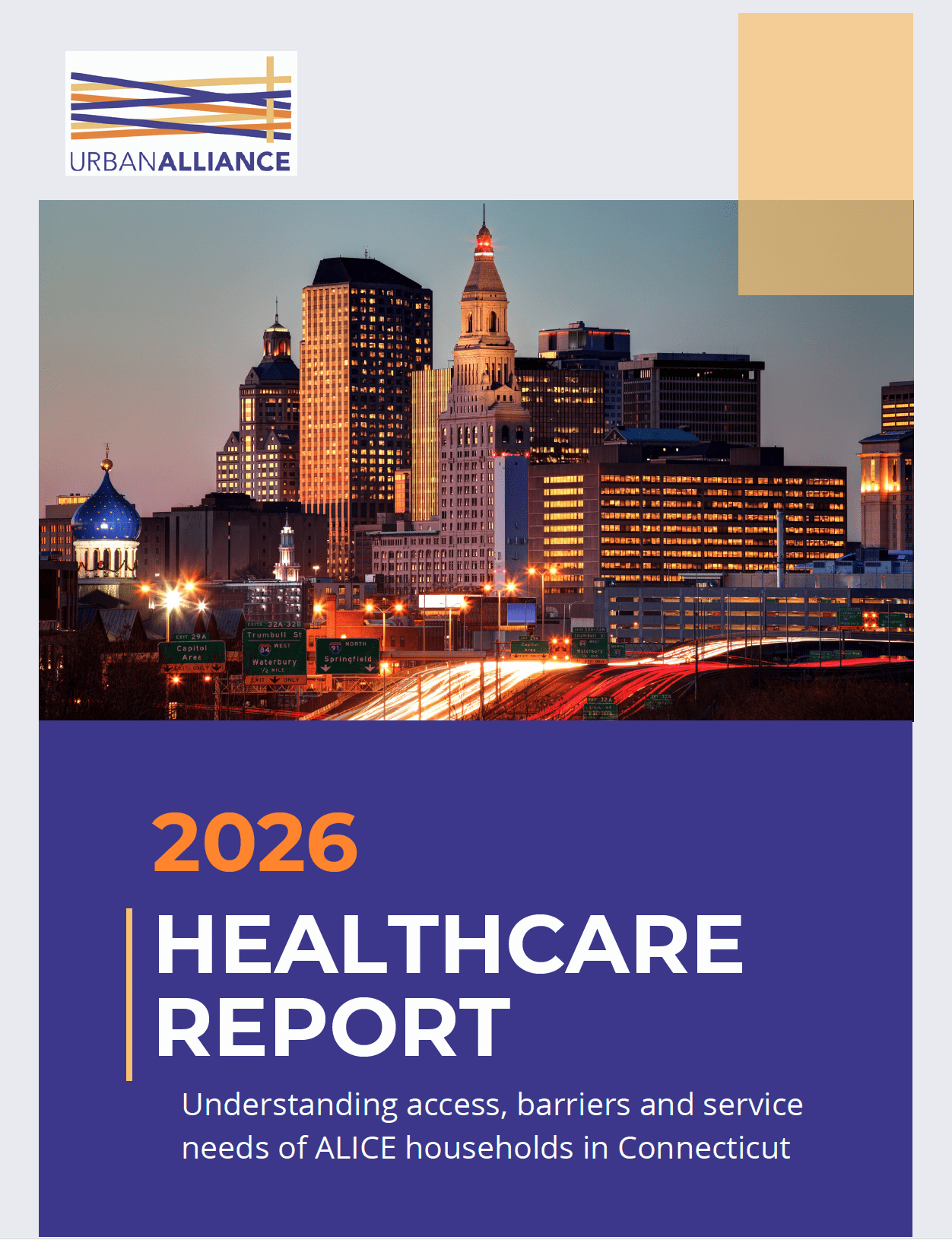
Download the ALICE Family Healthcare Report
This report explores the specific barriers ALICE households face in accessing health insurance and health care services.
While previous research has established the prevalence of ALICE households and highlighted general affordability challenges, this study fills a critical gap. It integrates both quantitative data and qualitative insights directly from ALICE households, offering a deeper understanding of their real experiences and health care access challenges.
Research as a Resource
Like all the resources Urban Alliance creates, these research findings are free and accessible to anyone.
They’re not locked behind paywalls or reserved for internal use. They exist to help any organization—whether you’re running a food pantry, supporting returning citizens, equipping youth, or strengthening families— better understand the community and serve more effectively.
The problems facing our region are complex, but they are not insurmountable. They require understanding. They require coordination. They require partners working together with clarity and shared knowledge.
That is the work—and the Urban Alliance Network is doing it, together.
Discover Additional Research
Download more studies and findings on our Community Research page.

The Impact of the Christian Faith on Relapse Prevention and Long-Term Sobriety

